The Cracks
SizeVariable (Projected onto 48m tower)TechniqueLight art installation (Gobo projections, color filters, lamps)Year2019/2020LocationMontelbaanstoren, Amsterdam, Netherlands
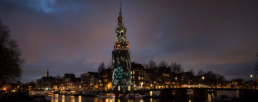
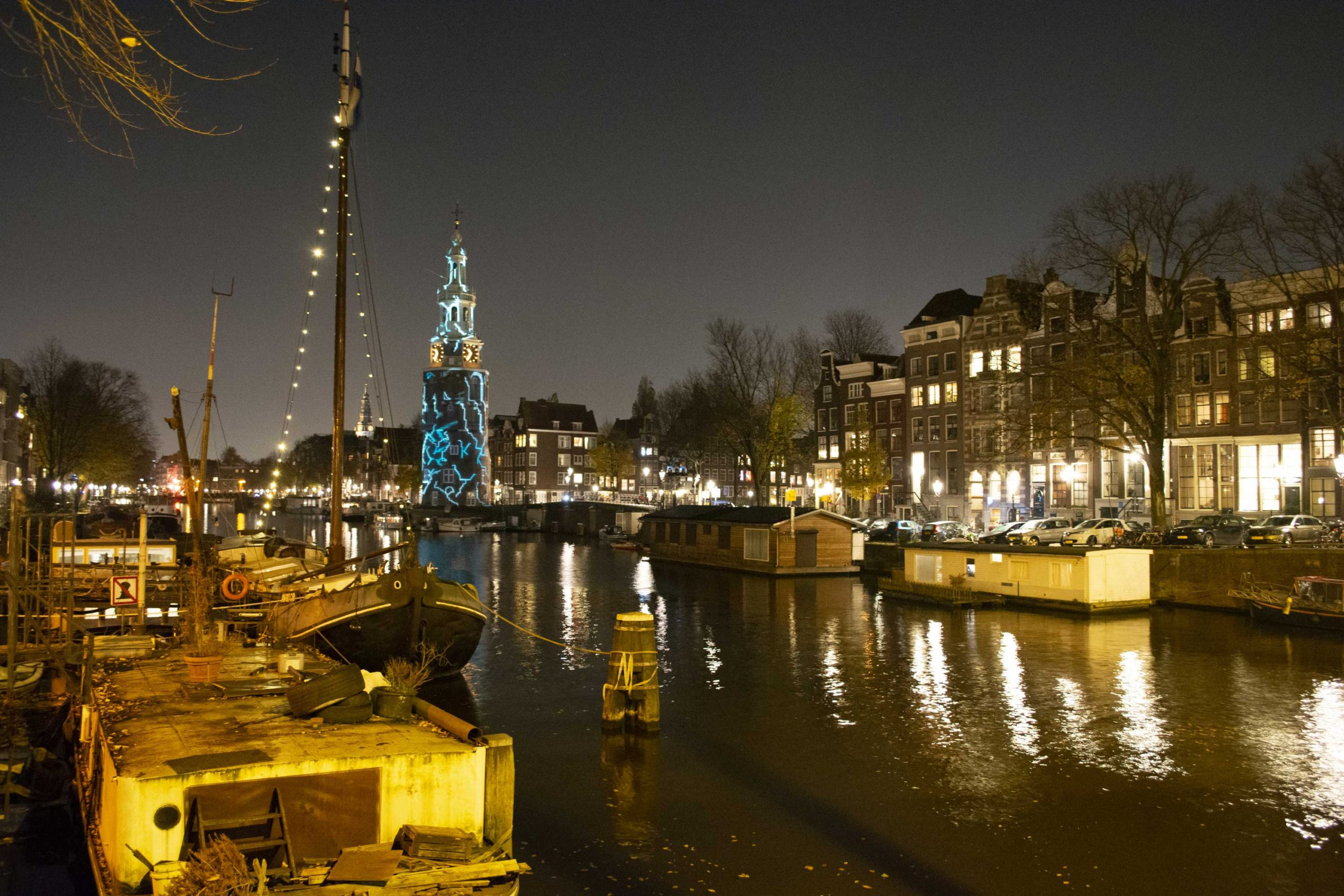
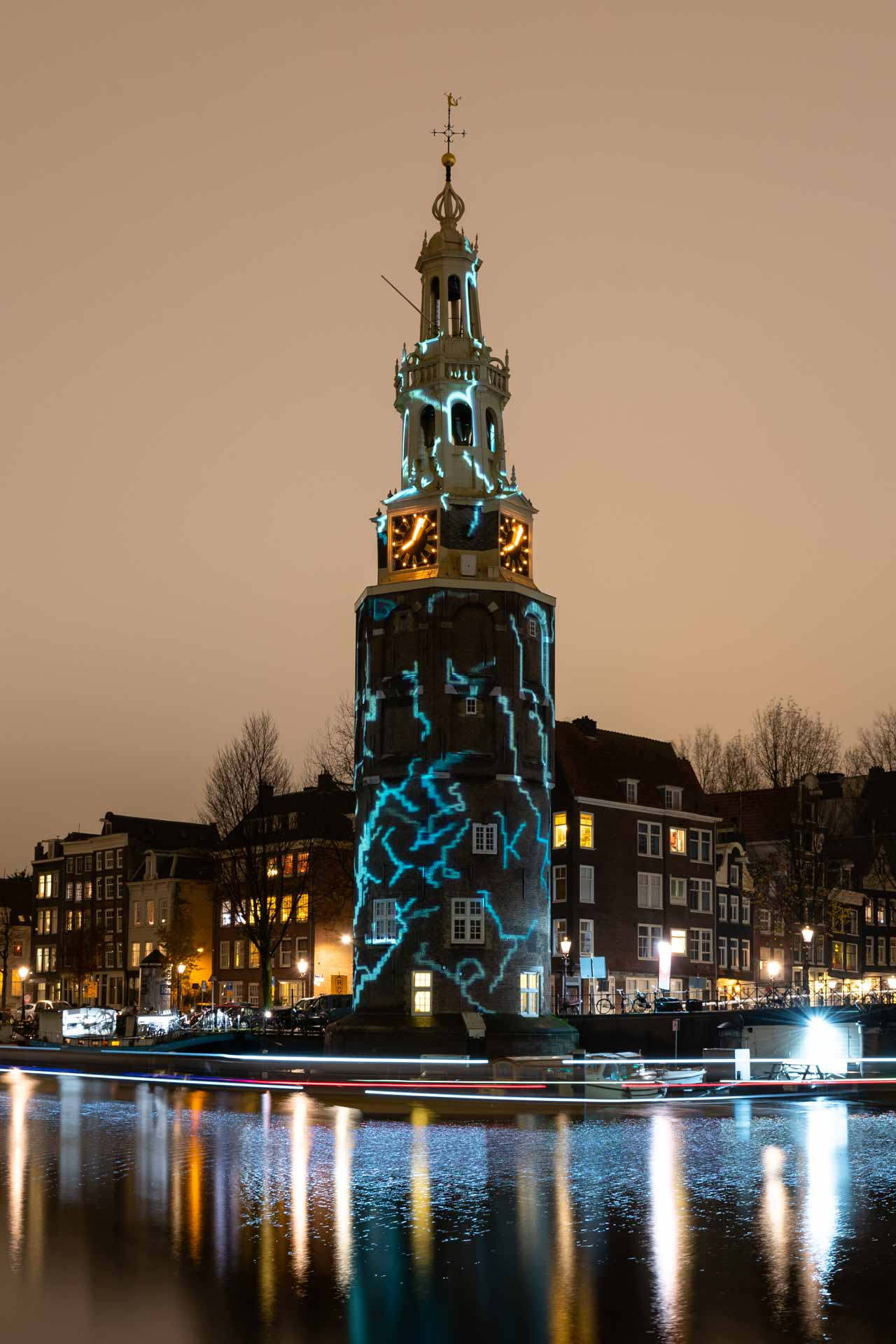
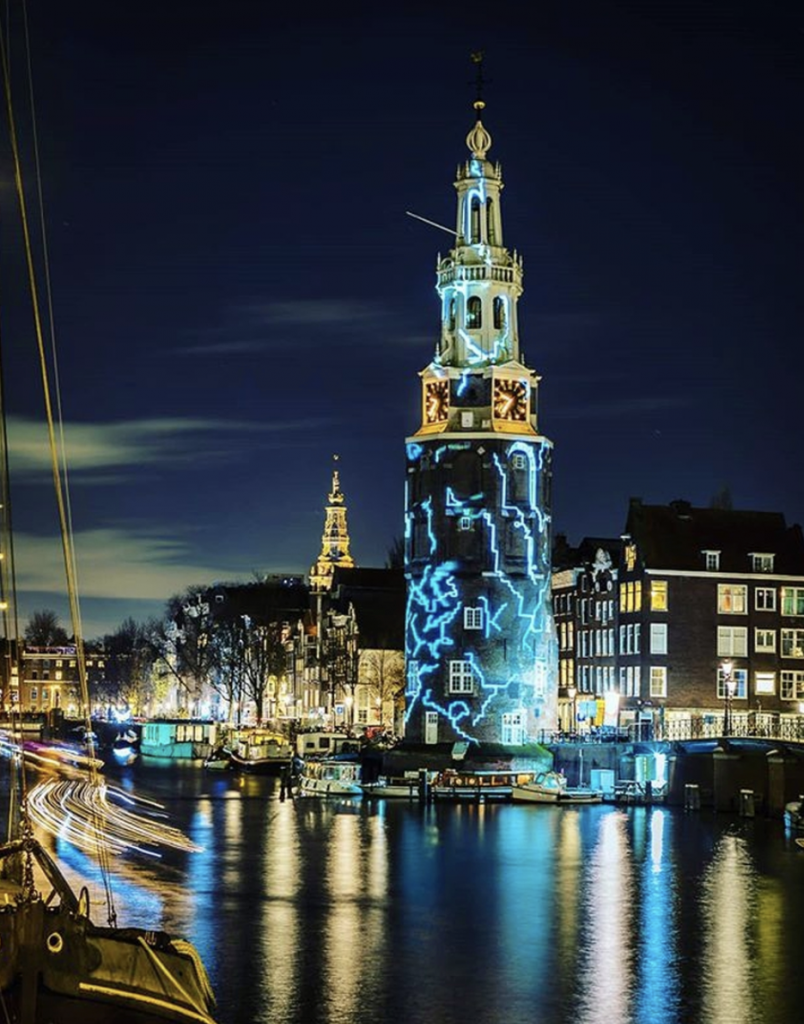
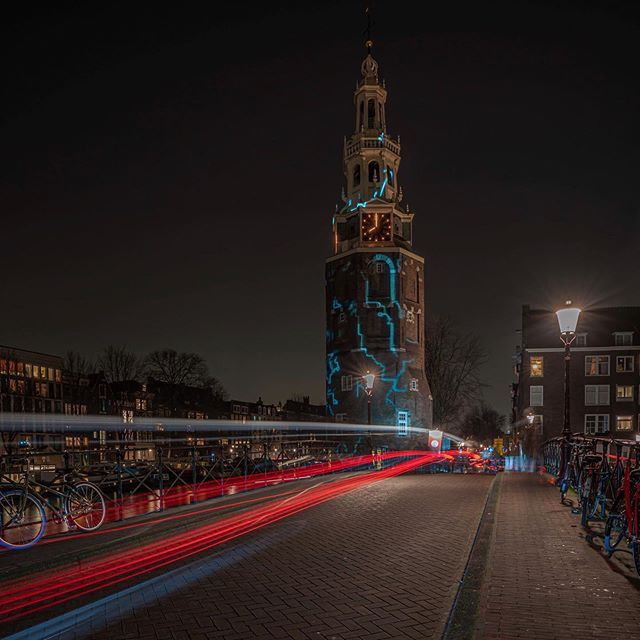
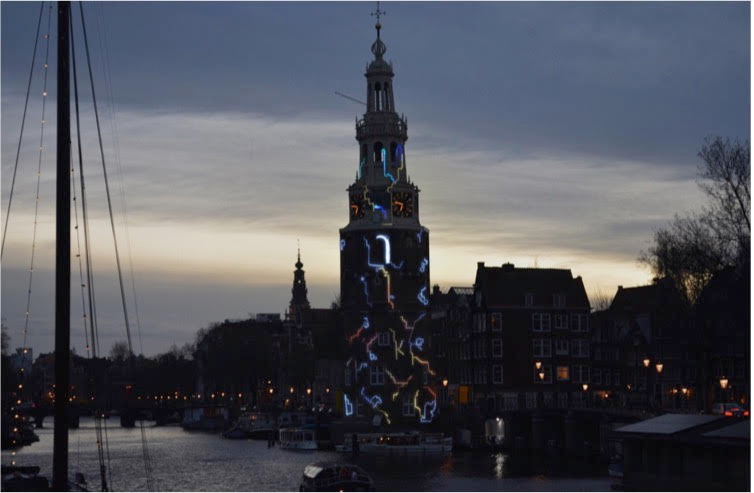
A site-specific light installation projecting intricate crack patterns onto the city’s historic defense tower. The work explores themes of ideological disruption, memory, and the philosophy of Kintsugi: finding beauty in imperfection. It challenges the viewer to reconsider cracks not as failures, but as openings that “let the light in.”Winner of the Open Call for the Amsterdam Light Festival Edition #8 (Theme: Disrupt!)
“There is a crack, a crack in everything
That’s how the light gets in”
Legendary Canadian singer and poet Leonard Cohen sang in his song Anthem (1992). Striving for perfection makes little sense, Cohen said, because life is simply about change and decay. Yet there is always hope, and we must embrace the imperfections in what we do and what we make; damage and defects define the character of a person or an object.
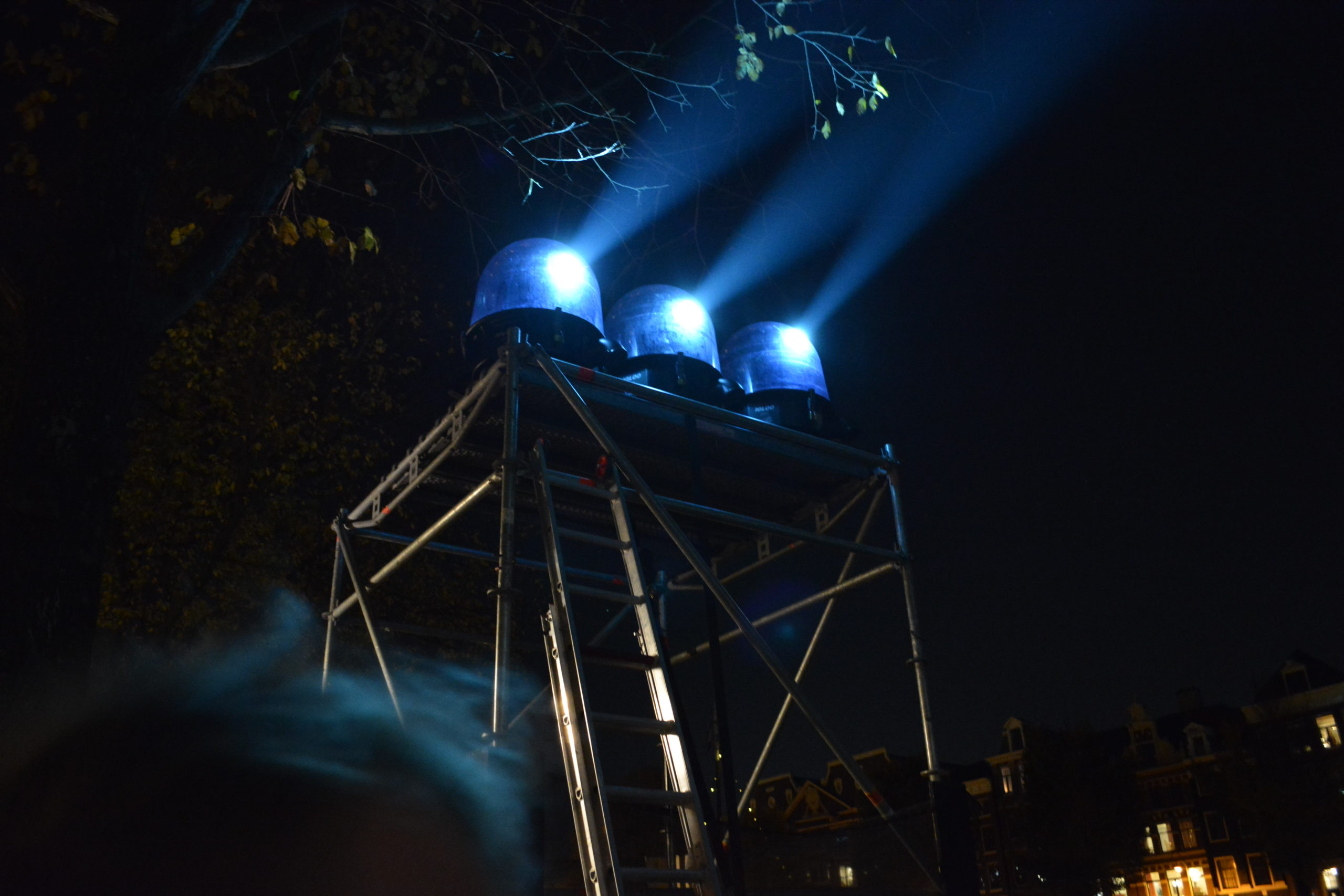
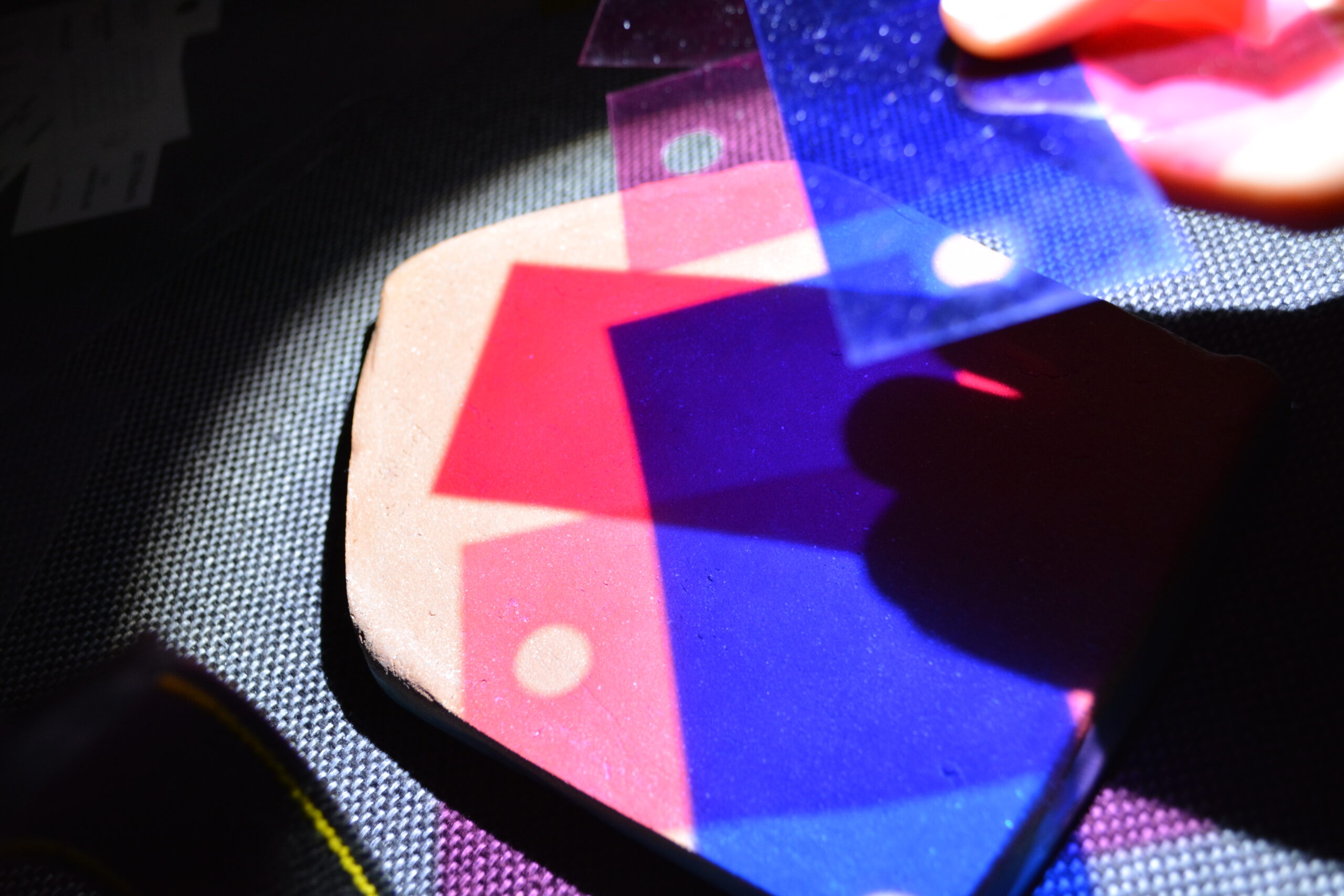
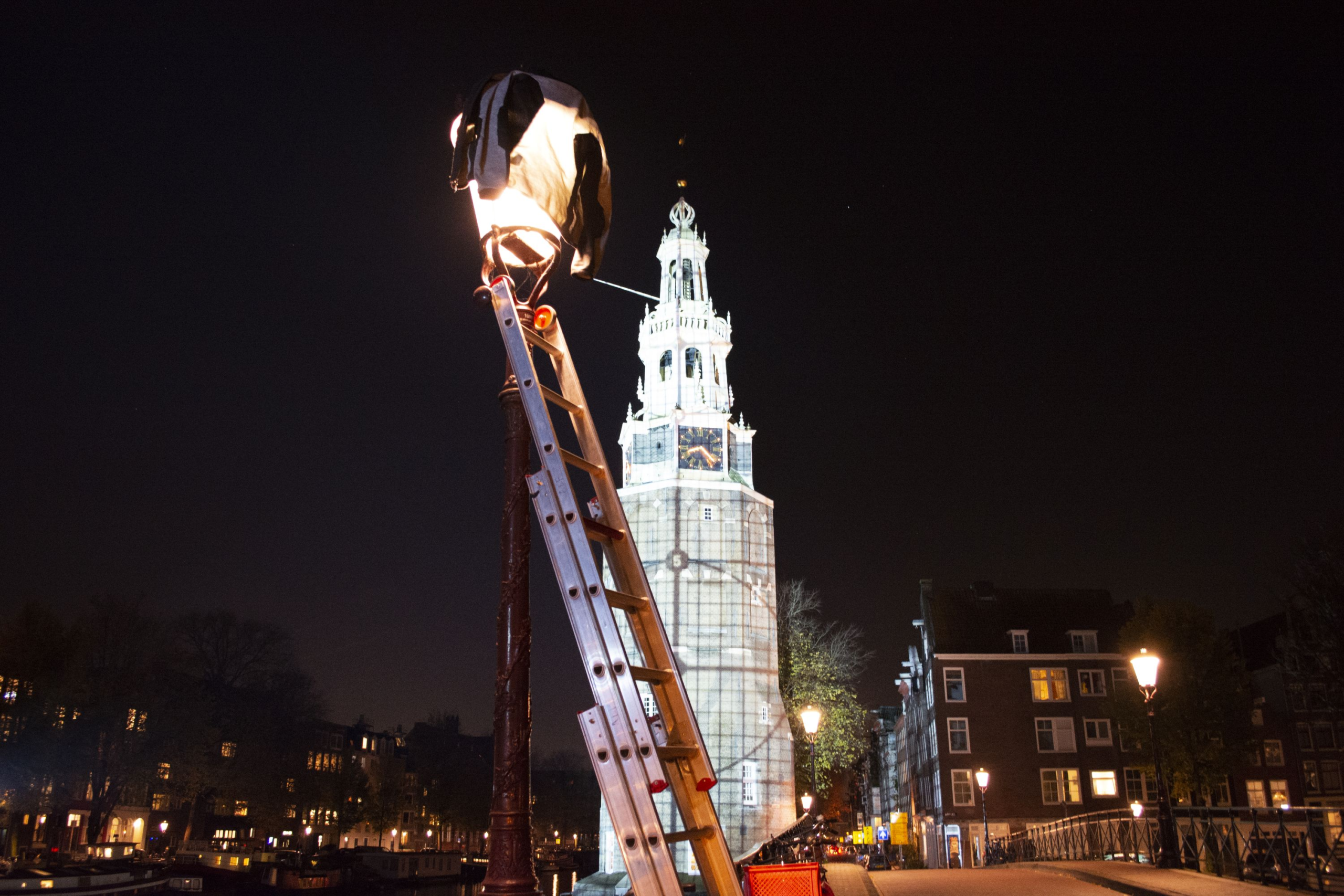
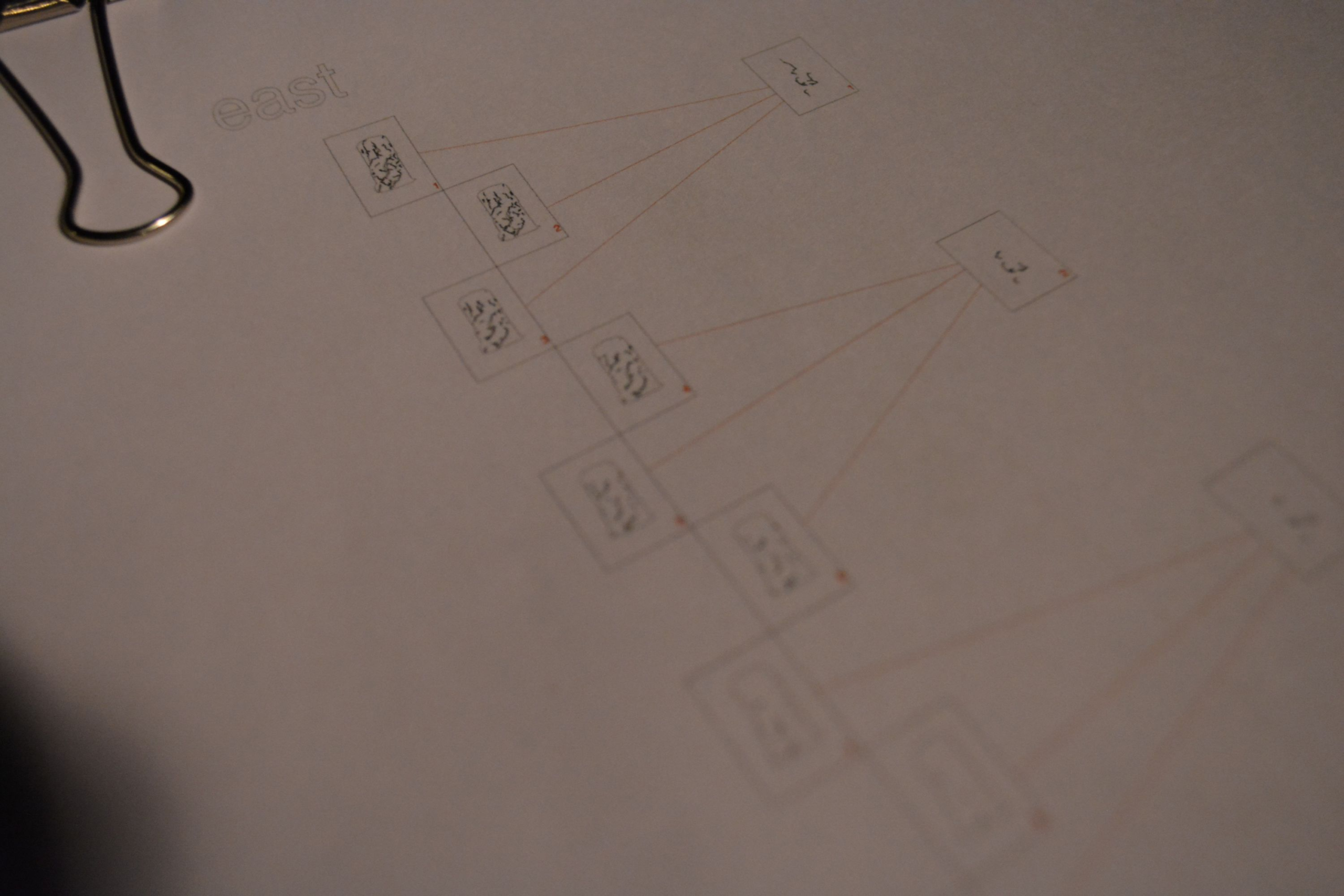
In this site-specific installation, I fracture the facade of Amsterdam’s 1516 Montelbaan Tower, rendering the historic masonry porous through a series of carefully mapped optical interventions. By deploying analog slides, color filters, and targeted projection lamps, I create luminous fissures that visually sever the structural integrity of the 16th-century brickwork. These illuminated fault lines simulate a slow, organic expansion across the architecture, charging the surrounding environment with a quiet, undeniable tension.
Geometry of decay
Drawing upon the Japanese philosophy of Kintsugi, my goal is to elevate architectural decay into an index of survival. In this context, the simulated fractures operate as metaphors for contemporary systemic rupture acknowledging the escalating collapse of our modern ecological, institutional, and social frameworks.
Transformation through friction
Where Western tradition mostly celebrates the uncracked and the perfect, this intervention insists that systemic friction is actually generative. I refuse to lean into nihilism; instead, I choose to view these cracks as indicators of history and acting forces. By illuminating the damage, I want to expose the internal fragility of our era while highlighting the exact sites where radical repair and transformation remain possible.
For me, visualizing these disruptions highlights the necessary transformations they set in motion. The collapse of old assumptions is not an end, but a prerequisite for new opportunities and perhaps, the light of a new world to finally break through.


Behind the scenes